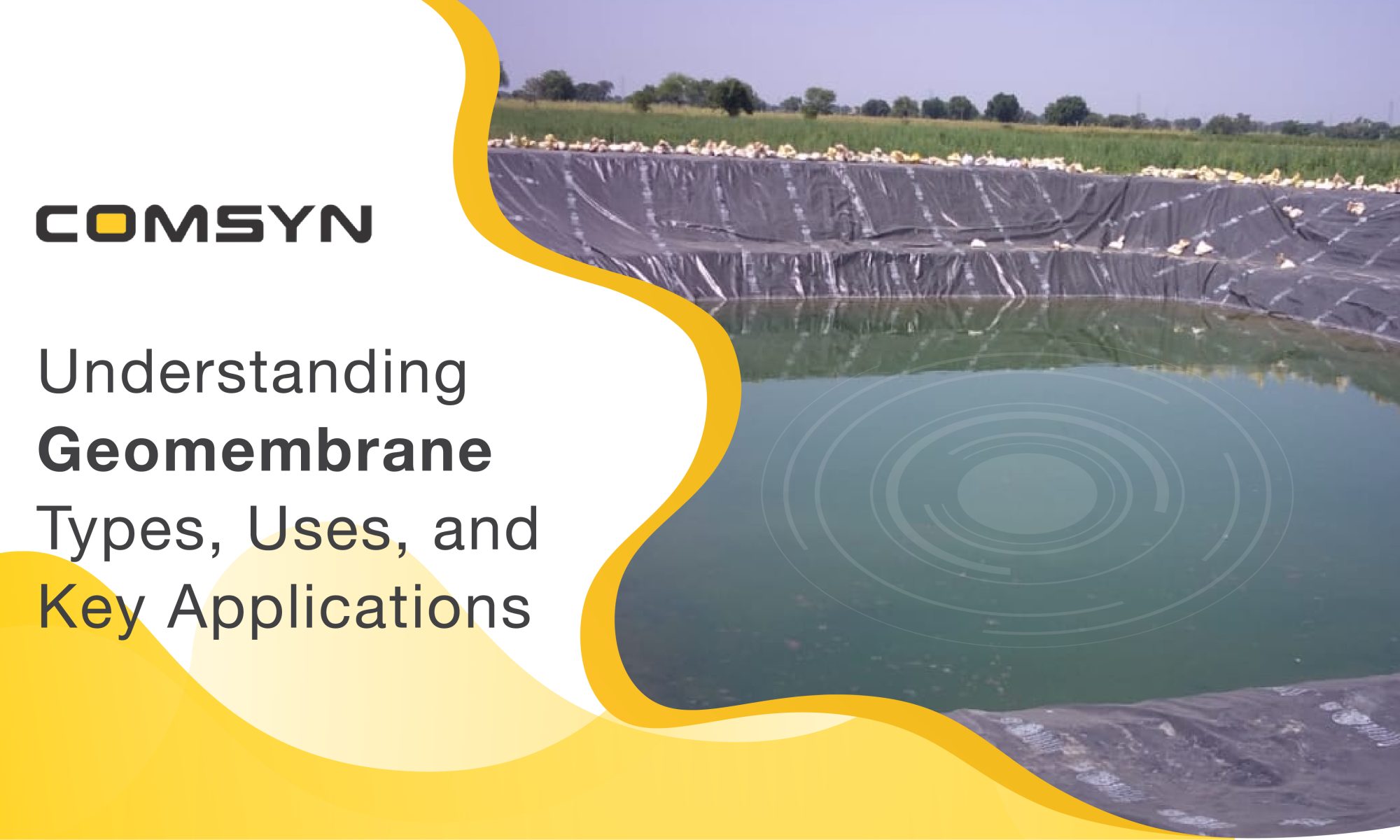
Modern infrastructure, environmental protection systems, and industrial operations require materials that can reliably control the movement of liquids and gases under demanding conditions. One of the most effective solutions for such applications is the geomembrane—a high-performance synthetic material used as an impermeable barrier in engineered systems. Geomembranes play a critical role in waste containment (such as landfills), water resource management (reservoirs and canals), and environmental protection in mining and industrial applications. By preventing leaks and isolating hazardous substances, geomembranes protect soil and groundwater while ensuring long-term system stability. This article explains what geomembranes are, outlines the major types, explores their key applications, and highlights the practical benefits of geomembrane systems in real-world projects. A geomembrane is a synthetic, non-permeable barrier designed to restrict the movement of liquids and gases within engineered containment systems. Typically manufactured from polymer-based materials, geomembranes provide continuous sealing to prevent leakage, seepage, and environmental contamination. The use of geomembranes has become standard practice in applications requiring secure separation between hazardous materials and surrounding soil or water systems. Their reliability and predictable performance make them essential components in modern containment design. Because geomembranes are fully synthetic, they are engineered to meet precise performance requirements. Compared to natural liners such as clay, geomembranes offer consistent thickness, predictable permeability, and superior resistance to environmental stressors. Key characteristics of geomembrane sheets include: These properties make geomembranes suitable for critical applications where system failure is not acceptable. In practice, geomembrane performance depends not only on material selection but also on correct specification relative to site conditions and containment objectives. For this reason, suppliers such as Comsyn typically support geomembrane selection by aligning material properties with project-specific environmental and mechanical requirements. Geomembranes are used across engineering and environmental projects to perform several essential functions: In high-risk containment systems, geomembranes form a critical safety barrier. Even minor leakage can result in environmental damage or operational failure, making material selection and installation quality especially important. Geomembranes are classified based on polymer composition, flexibility, chemical resistance, and mechanical strength. Selecting the appropriate type depends on site conditions, expected loads, exposure environment, and long-term performance requirements. HDPE (high-density polyethylene) geomembranes are known for their durability and resistance to aggressive chemicals. They are widely used in landfills, mining operations, and large reservoirs where long-term containment is essential. Key characteristics include: For projects requiring maximum protection and structural stability, HDPE geomembranes are often the preferred choice. LLDPE (linear low-density polyethylene) geomembranes offer greater flexibility than HDPE while maintaining high impermeability. They are commonly used in applications involving uneven subgrades or differential settlement. Advantages include: These properties make LLDPE geomembranes suitable for watertight and environmental lining applications where movement or settlement is expected. PVC geomembranes are flexible and easy to install, making them suitable for decorative ponds, canals, and smaller containment structures. Key features include: PVC geomembranes are typically used in low- to medium-risk applications where flexibility is a design priority. EPDM geomembranes are synthetic rubber-based liners known for their exceptional flexibility and resistance to weather and temperature variation. They perform well in applications requiring frequent expansion and contraction. Common uses include: The elasticity of EPDM geomembranes allows them to adapt to environmental movement without compromising containment. Reinforced geomembranes incorporate an internal fabric layer to enhance tensile strength and structural stability. They are used in applications subject to high mechanical loads or large spans. Benefits include: Geomembranes are widely used across industries where environmental protection and containment reliability are critical. In landfills and waste containment systems, geomembranes act as a barrier that prevents leachate from contaminating soil and groundwater, supporting regulatory compliance and environmental safety. Reservoirs, canals, and ponds rely on geomembranes to prevent water loss and maintain consistent storage capacity. Properly designed geomembrane systems provide long service life with minimal maintenance requirements. Mining and industrial facilities use geomembranes to contain tailings, chemicals, and process water. Their resistance to aggressive substances makes them essential in high-risk containment environments. At this stage of project design, geomembrane performance is often enhanced by combining the liner with compatible geosynthetic layers, such as protection or separation systems. Manufacturers like Comsyn assist engineers in selecting geomembrane solutions that align with both containment demands and site-specific risks. Geomembranes offer several performance advantages: These properties allow geomembranes to deliver reliable containment even in challenging environments. Although geomembrane installation requires technical expertise, long-term value is achieved through: A well-designed geomembrane system improves operational safety while delivering strong lifecycle cost benefits. A clear understanding of geomembrane types, material properties, and application requirements enables engineers and project owners to design containment systems that deliver long-term performance, safety, and environmental protection. When correctly specified and installed, geomembrane systems provide a dependable foundation for infrastructure, water management, and industrial containment projects. For projects requiring durable, chemically resistant geomembrane solutions tailored to site conditions, visiting Comsyn or consulting their technical team can support informed material selection and long-term containment reliability. An adequately installed and selected geomembrane should last anywhere from 20 to 40 years or longer, depending on the environmental conditions. Thickness varies depending upon the purpose of your project, its load conditions, and the nature or amount of chemicals used; generally, thicknesses are between .50 mm and two point five (.5 -2.5 mm per project. Yes, certified geomembranes are used frequently as liners for potable and environmentally sensitive installations. Surface preparation, sheet placement, welding, and non-destructive testing of the seams will occur so as to establish the integrity of the geomembrane sheet before putting it into service. The total costs associated with the geomembrane system are influenced by various items, including the materials being utilized, thickness, complexity of installation, site conditions, and quality assurance measures taken.Understanding Geomembrane: Types, Uses, and Key Applications
What Is a Geomembrane?
Geomembranes as Synthetic Materials
Purpose of Geomembranes in Engineering and Environmental Protection
Types of Geomembranes
HDPE Geomembrane Sheets
LLDPE Geomembrane Sheets
PVC Geomembrane Sheets
EPDM Geomembranes
Reinforced Geomembrane Materials
Geomembrane Applications Across Industries
Environmental Protection and Landfills
Water Containment and Reservoirs
Mining, Industrial, and Chemical Containment
Benefits of Geomembrane Systems
Permeability, Durability, and Chemical Resistance
Economic Viability and Environmental Compliance
Conclusion
FAQs

- About Us
- Products
- Markets Served
-
- Investor Relation
- Board Of Directors
- Committees Of Board
- Corporate Governance
- Financials
- Annual Report
- Key Managerial Positions
- Shareholding Pattern
- Notices
- Policies Programme
- Announcements
- Statement of Investor Complaints
- Unpaid & Unclaimed Dividend
- Prospectus
- Investors Contact
- Subsidiary Financials
- IEPF
- Preferential Issue – 2024
- MOA & AOA
- Integrated Filing
- Sustainability
- Contact Us
- TechTex
- Brochure