FIBC Bulk Bags have become the accepted norm for transporting and storing bulk product across a range of industries, including agriculture, construction, chemicals, food processing, mining, and manufacturing. While the materials, size, and design of the bag are all important to the user, the FIBC lifting loops are perhaps the most overlooked component of the bulk bag, yet they play an important role in ensuring safe and efficient operation. Lifting loops are the link between the bulk bags and the equipment used to lift them (e.g., forklifts, cranes, hoists). Choosing the right design can improve your efficiency when handling them, minimize damage risk, and provide safe lifting operations. In this guide, different types of FIBC loops will be explored, and their intended applications, as well as what to consider when making your selection of which lifting loops to use on your FIBC bulk bags, will be discussed. Flexible Intermediate Bulk Containers (FIBC’s) – commonly referred to as “bulk” or “jumbo” bags are large, industrial containers made of woven polypropylene material, used for storing and transporting dry, free-flowing material in the range of 500 kg – 2000 kg+. FIBC bags are commonly used for agricultural products, such as fertilizers, seeds, cement, sands/aggregates, chemicals, food ingredients, and powders/minerals. The lifting loop design is one of the most critical features in the overall design of FIBCs, as it has a significant impact on safe handling and operational efficiency. FIBC lift loops are made from reinforced woven polypropylene materials and are located on either the corners or the sides of the bulk bag. These loops allow the use of forklifts, cranes, and other equipment to safely lift, move, and place the bulk bag. The quality and style of lifting loops will influence: By selecting the right design for the lifting loop, bad accidents, loss of product, and damage to people and equipment can be avoided. Selecting an improper lifting loop can create several problems: When you choose the correct type of lifting loops, this will enhance your freight/logistics operation and also maximize your FIBC (Flexible Intermediate Bulk Container) bag life. Different types of bagging environments require various configurations of looping. 1. Corner Loops Corner loops are typically sewn into the corner of the bag at the side seams. Advantages: Ideal For: Of all of the loop designs for standard FIBC bulk bags, corner loops represent the majority of lifting loop styles used today. 2. Cross-Corner Loops Cross-corner loops extend from the top of one side seam to the corner and back down to the bottom of the opposite side seam. Advantages: Ideal For: 3. Single Loop FIBC Single-loop FIBCs contain one lifting point incorporated into the construction of the bag. Advantages: Ideal For: Single loop designs are most frequently used by companies focused on cost savings and automating their operations. 4. Two-Loop FIBCs These freestanding, rectangular FIBCs have two sets of lifting loops located opposite each other. Advantages: Ideal For: 5. Tunnel Loop FIBCs Tunnel loops are large fabric sleeves sewn into FIBCs that allow for easy insertion of the forklift’s forks. Advantages: Ideal For: Tunnel loops help to improve productivity by simplifying the operation of lifting the FIBC off the ground. 6. Stevedore Straps Stevedore straps are lifting straps that are sewn between the FIBCs’ primary lifting loops, providing additional support when lifting. Advantages: Ideal For: Stevedore straps provide additional support when lifting heavier loads and require more support. The actual load capacity is determined by measuring the weight of what will be carried in the bag, and thus heavier loads require: Keep in mind that looping needs to be able to handle the desired working load, and therefore you must always check that the loops will meet this requirement. Different loop configurations will accommodate different ways of lifting/using the bag, such as with a crane or a forklift. When lifting with a forklift, the most suitable loops to use are: When lifting with a crane, the most suitable loops to use are: Correctly matching the loops to their intended equipment will provide maximum efficiency and safety during the lifting process. The type of material contained within the bag may additionally affect the requirements for lifting. When evaluating the material, one should consider such things as: Heavy or unevenly balanced materials often require different configurations of loops to lift them successfully. Conditions Imposed by Storage and Transportation Environmental conditions encountered during both storage and transportation will impact the performance of the loops that are attached to the bag. The most prevalent conditions will include: UV-stabilized woven polypropylene loops will likely be required for use outdoors. Lifting loops will also be manufactured with a certain safety factor that has been predetermined based upon the configuration of the loop; i.e. Choosing loops that meet and comply with the regulated safety factor will ensure that the handling of the bag is safe throughout its lifetime. The majority of FIBCs use high-strength woven polypropylene webbing as their lifting loop. Why Woven Polypropylene? The flexibility of the lifting loops and the ability of woven polypropylene to hold heavy loads have made it the preferred material for FIBC lifting loops worldwide. Choosing the correct lifting loop is one aspect of the entire operation. However, handling loops correctly is just as significant. Inspect Follow Lifting Check for: Any type of snatching lift can put a tremendous amount of stress on the lifting loop. Use Compatible Equipment for Loop Forks, hooks, and lifting devices must be sized adequately to match the loop design. Follow the Manufacturer’s Instructions for Handling Always use the manufacturer’s instructions. Your local FIBC supplier can assist you in selecting the appropriate configuration for your lifting loops depending on the following criteria: Using custom-designed lifting loops will help maximize productivity while maintaining compliance with safety regulations. When using an FIBC Bulk Bag, the effectiveness of its lifting loops adds to the overall performance of the bulk bag. Whether you are using them for agricultural products, chemicals, minerals, or construction materials, the right design of FIBC lifting loops can enhance safety, improve overall working efficiency, and lessen the risk associated with handling bulk products. In order to select the best solution for your bulk product packaging needs, companies should familiarize themselves with the various types of FIBC lifting loops/loops available, evaluate their current handling equipment (if applicable), and determine what type of load requirements are necessary. This information will allow you (as a business owner) to select the most appropriate solution for your operation. If you are searching for the highest-quality FIBC Bags, then Comsyn is your answer! Comsyn manufactures high-quality woven polypropylene bulk bags with customized lifting configurations, which will assure safety and efficiency in your bulk material handling application. All of our woven polypropylene bulk bags are engineered to meet the demands of their respective industry across the globe! Contact one of our experts today for assistance in choosing an FIBC Solution which fits your application. These lift loops are used to provide a safe way to lift, transport, and place large quantities of materials (bulk bags) with the use of different types of equipment, including forklifts, cranes, and hoists. The most commonly preferred styles for forklift operations are cross-corner and tunnel lift loops due to the easier access to the forks, improved efficiency when handling the load, and better load stability while in the forks. The majority of FIBC lift loops are manufactured from high-strength woven polypropylene webbing that is durable, offers high break strength, is moisture resistant, and has a long service life. The selection of the appropriate FIBC lift loops is based on many factors, including the weight of the load being lifted, the type of handling equipment being used, the type of materials being stored in the bulk bag, the storage conditions for the bulk bag, and safety requirements.How to Choose the Right Lifting Loops for FIBC Bulk Bags?
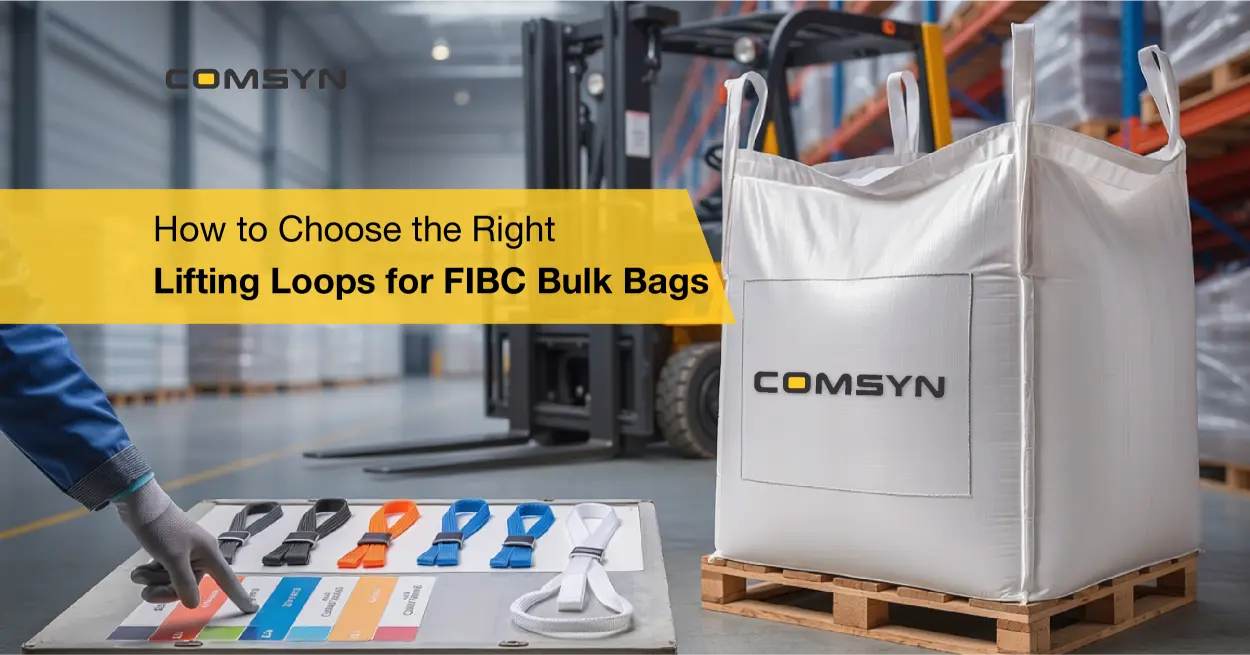
Understanding FIBC Bulk Bags
What Are FIBC Lifting Loops?
Why Selecting the Right FIBC Loop Matters
Common Types of FIBC Lifting Loops
Factors to Consider When Choosing FIBC Lifting Loops
The Role of Woven Polypropylene in Lifting Loops
Best Practices for Safe Lifting of Bulk Bags
Why Work with an Experienced FIBC Manufacturer?
Conclusion
FAQs

- About Us
- Products
- Markets Served
-
- Investor Relation
- Board Of Directors
- Committees Of Board
- Corporate Governance
- Financials
- Annual Report
- Key Managerial Positions
- Shareholding Pattern
- Notices
- Policies Programme
- Announcements
- Statement of Investor Complaints
- Unpaid & Unclaimed Dividend
- Prospectus
- Investors Contact
- Subsidiary Financials
- IEPF
- Preferential Issue – 2024
- MOA & AOA
- Integrated Filing
- Sustainability
- Contact Us
- TechTex
- Brochure