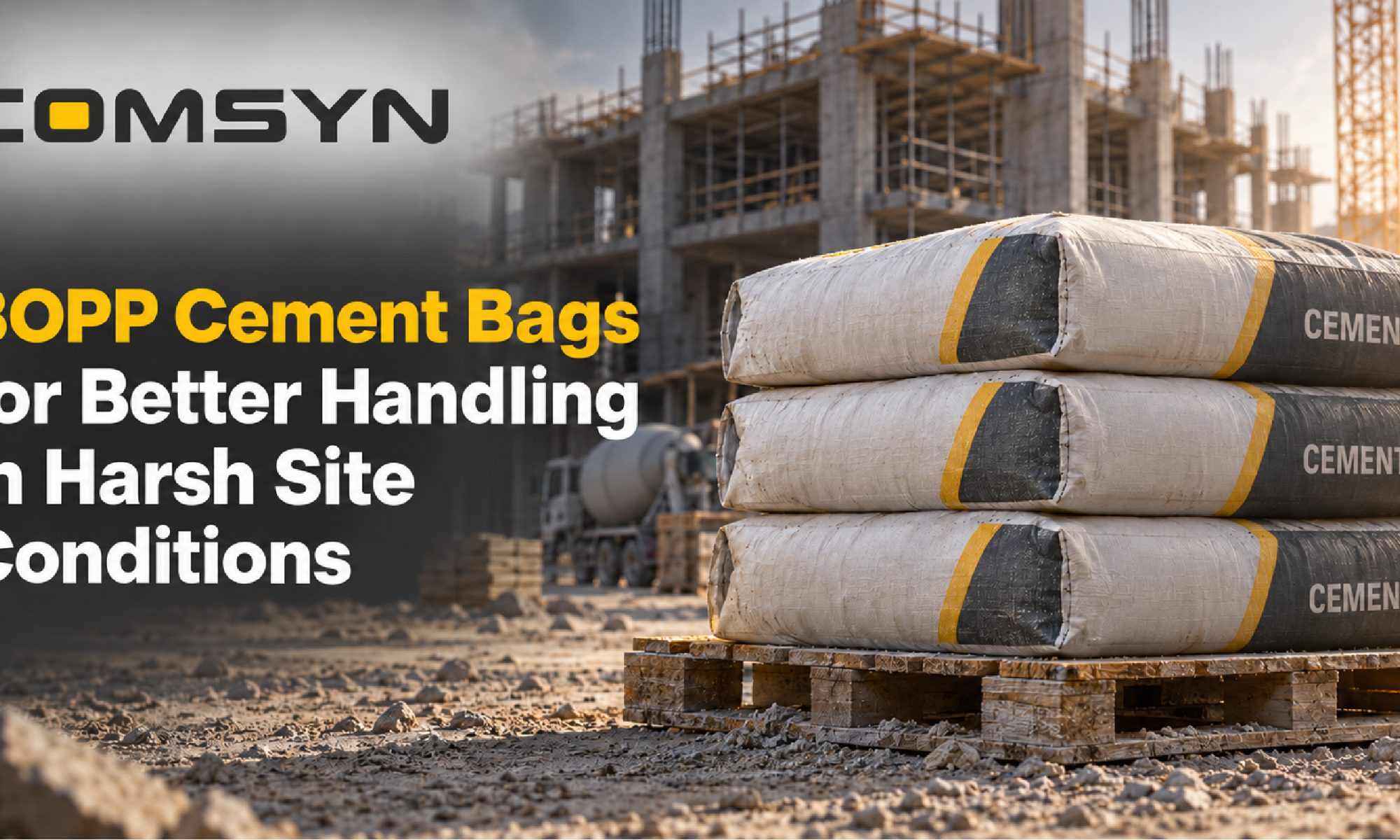
The packaging of cement has to withstand more than just filling and transportation. In reality, bags are taken from the production line to a warehouse, from there to a truck, through a network of suppliers, and on to a construction site where they may be dragged, stacked, dropped, exposed to dust, and handled in many other ways before actually being put to use. Thus, packaging performance is a real business challenge, not merely an issue of design. In this regard, well-engineered BOPP Cement Bags are actually able to contribute to enhanced durability, moisture resistance, print quality, and handling without reducing strength properties of woven polypropylene. For cement manufacturers, distributors, and procurement departments, the vital question is not whether the bag looks strong but whether it has been designed to work in real conditions. Cement is a material that is dense and finely powdered, making it susceptible to getting damaged by moisture. It is, therefore, imperative to protect cement bags even while they are on the shelves for sale. Because when cement bags are on the shelves, they often go through difficult situations that can damage the bags, such as: If a bag is weak and/or poorly designed, it can tear or leak out the product. It is clear therefore that packaging must perform two crucial functions: Protect the cement. Be intact all through the supply chain. It is at this point that BOPP bags for cement packaging deliver the impressive combination of woven strength and laminated surface protection. According to Comsyn, it applies BOPP and PP woven bags for construction and cement. The BOPP laminated bags from this company are able to withstand rough handling and harsh conditions, while cement, sand and aggregates are among the materials that the BOPP laminated bags are specifically listed among their applications. BOPP laminated bags consist of a woven polypropylene mesh with a layer of biaxially oriented polypropylene film coating. The woven mesh provides strength and carrying capacity, while the laminated outer layer allows for better water-resistant properties, high quality of printing and surface protection. Comsyn states that BOPP laminated bags offer resistance to moisture, durability and advanced protection, with the design being adjustable according to a customer requirement. When used for packaging cement, those features become especially important. Cement bags are seldom treated with care. They are liable to be tossed during the loading of bags, dragged over truck beds, carried around between stacks, and repeatedly rearranged on building sites. All of this leads to an accumulation of tension in the following areas: That is why strong cement bags should be carefully assessed as an independent construction instead of just comparing the thickness of materials used for waving. This tough woven foundation enables the bag to withstand heavy weights while the laminated construction protects the bag from wear and tear. Moisture is one of the greatest dangers to cement storage and distribution. Even brief exposure can change the state of the goods, given that bags stay in humid warehouse conditions, temporary storage facilities, and open distribution zones. This is why moisture-resistant cement bags are indispensable. BOPP lamination improves the barrier properties of packaging as compared to a classic unlaminated woven sack. According to the information provided by Comsyn, BOPP bags are moisture-resistant, and the company also produces BOPP laminated woven bags with liners for different moisture resistance levels. Moisture Protection Should Correspond to the Distribution Conditions Not every cement bag needs a similar level of barrier performance. For example, a quick-moving bag will need different performance than a bag stored for a longer time in moist or humid conditions. Thus, procurement departments need to consider the following: The answers depend on the specific route from the plant to the site in question. An insignificant hole in the cement bag can be the cause of a huge expenditure. The fine powder which is spilled out during the process of: and transporting, leads to both, the loss of the product and difficulties of cleaning. Special bags that are resistant to tearing take care of keeping the cement in pressing conditions. Bag’s strength depends not only on the BOPP itself, but also on: Comsyn BOPP specifications show different variations of the mesh and denier together with several top and bottom construction types. Cement is transported through the whole supply chain in bag piles. A bad bag shape, inconsistent sizing, or weaker build can lead to unstable bag pile construction. This would occur in: Hence, bag quality is an important issue not only for bag strength. It determines how predictable the way bags stand upon each other is. Comsyn’s BOPP range includes circular bags that are made with stackability in mind as well as gusset and back seam designs suitable for various purposes. It is important for procurement departments to define the palette and stacking aspect beforehand. Cement bags are constantly rubbing against one another: Regular friction makes the bags’ surfaces damaged prior to reaching the end customer. Thus, the necessity for robust bags for building materials is directly related to transport conditions. A bag designated for short distance handling does not have to be constructed in the same manner as a bag that travels long distance. The buyers should asses the packaging along the whole way. That includes not only the distance but also the number of handling stages. While a sturdy material cannot make up for a defective closure. When cement bags are dropped or stacked upon one another the internal pressures are transmitted unto seams and closure points immediately. Hence, the bottom construction and stitching play a significant role in specifications. According to Comsyn there are a number of options for the bottom of woven and BOPP bags including the single-fold and the double-fold offerings and different stitching types. Also, there are several options for the top part of the bags depending upon customers’ needs. Ultimately, the best solution will depend on such factors as: One should agree upon all these points during the process of design and development of the product instead of leaving them as some afterthoughts. The dimensions of a bag have significant implications in more ways than just its looks. Incorrect dimensions may lead to: 1) ineffective filling 2) steel stacking 3) excessive bag movement 4) wastage of packaging material 5) poor truck or pallet usage. For BOPP bags used for cement packaging, the dimensions must be decided based on the packed product rather than copied from the last one. Important details to consider: 1) filling weight 2) cement bulk density 3) filling equipment 4) headspace 5) bag closing processes 6) size of pallets 7) stacking configurations Comsyn produces BOPP bags and woven bags dimensions meeting the customer’s requirements, allowing flexibility on the width but providing fixed length options. For the purchasing team, dimensional optimization is key for measuring the effectiveness of packaging and keeping the costs down. Depending on their construction and mode of handling, smooth bags may slide while being stacked or transported. Some applications require added anti-slip features to stabilize them. Comsyn offers BOPP woven bags with anti-slip printing in its bag selection. This becomes significant when increased resistance to displacement is required during transportation or storage. Nonetheless, the feasibility of using anti-slip features should be verified against operational needs. They should solve a logistical problem rather than serve merely as another specification item. In the past, cement bags have been treated primarily as practical sacks. That is no longer the case. A cement bag now carries a lot of information, such as: BOPP enables more freedom for detailed graphics to be used than conventional woven bags. Comsyn’s BOPP bags offer HD printing, custom design and a wide variety of colours, which enables cement manufacturers to marry technical packaging requirements with more vibrant visual image. Though artwork of good quality is appreciated, it has no value if the bag’s contents cannot be read when it arrives with the customer. Cement bags undergo harsh conditions, such as: This means that the buyer must understand how well the printed information will remain readable while the bags are being transported. The most important information about the product type, grade, and handling has to be readable all the time for the bag’s maintenance life. Consequently, in order to select a manufacturer of cement bags, the buyers must verify the printed information and check high quality of the production process at the same time. These two aspects can never be separated. In certain distribution situations standard lamination may not give the necessary degree of protection. Adding the liner creates an extra barrier inside the woven construction. Next, Comsyn has included BOPP laminated woven bags with liners in the list of their BOPP items with the understanding that liners provide extra moisture protection during the delivery and storage of the bags. Whether a liner is required or not depends on: Adding a liner when it is not needed leads to excess expenditure. Not using the liner when it is actually required may cost much more. One important distinction when it comes to procurement is that a stronger bag does not mean it is a better bag. The principle of packaging is that the strength of a bag needs to be appropriate for the given application without any excess material or features. Being too precise with specifications results in increased material usage, costs of the bag, freight weight, and overall costs incurred. Conversely, if the specifications are not strict enough, it might lead to rising risks. Thus, the objective should be to avoid either of the extremes and aim for balanced specifications. An experienced manufacturer of cement packaging bags can be helpful in this process. The supplier should be able to explain how features of the fabric, dimensions, lamination, seams, and other characteristics correspond with the conditions where the bag will operate. Although a laboratory specification is important, field performance is more crucial. Manufacturers should test a newly developed cement bag under real conditions before large-scale release. Ensure optimal performance of the bag with filling equipment and that there are no problems with its weight. Assess whether the bag remains unharmed after falling and other practices involving manual labor. Establish whether bags containing cement remain stable and keep their positions when piled. Check how bags behave under humidity and other storage conditions. If possible, investigate how the bags behave at various stages of transportation. Make sure that crucial information and the name have not been affected by the transportation and handling of the bag. The tests provide procurement and operations specialists with substantially better data compared to evaluating the bag prior to putting it into operation. Before making a commercial order, check with the supplier: A trustworthy supplier should provide answers to these questions in technical terms. PP woven bags are still cherished for cement and other construction material handling due to their strength and ability to support heavy industrial loads, while BOPP laminated bags offer some additional capability, being a solution when it comes to buyers’ needs for: Thus, the choice must be made according to the requirements. If cost-efficiency and strength are the major concerns, it may be enough to choose a traditional woven option. In case protection, appearance, and severe distribution conditions are important as well, BOPP bags can be taken into account. Bag failure comes with more than just the price of a new bag. It might cause such issues as: These costs are more difficult to spot in the price proposals, but they still have an impact on business. Thus, it is best for purchasing teams to evaluate cement bags based on the costs of a bag that arrives intact instead of the cost of an empty bag. Comsyn produces BOPP bags and polypropylene woven sacks in addition to its other industrial packaging products. The BOPP lineup of the company is used in construction applications including cement, sand, and aggregates, and also includes customizable options in dimensions, printing, lamination, color, and bag construction. As a result, buyers are free to come up with their own specification for their packaging instead of depending on a predesigned bag specification. There is no single perfect cement bag for every market. A bag moving through protected warehouses and mechanized handling does not have the same risks associated with one passing through various distributors and challenging construction sites. Thus, it is important to specify the right BOPP Cement Bags considering: By taking all these factors into consideration, packaging is very effective. If you are looking to evaluate a current cement bag or come up with packaging for an uncharted market, then you can get in touch with Comsyn’s packaging team to know about the fill weight, construction, lamination, printing process, moisture protection, and handling needs. When you design a bag according to reality in the supply chain, you can enhance protection, consistency in handling, and the overall efficiency of the packaging. BOPP Cement Bags combine a woven polypropylene base with a laminated film layer, supporting strength, moisture resistance and durable printed surfaces. These characteristics can make them suitable for cement that undergoes repeated handling, storage, and transport. BOPP lamination can improve moisture resistance compared with basic woven packaging. For more demanding storage conditions, additional constructions such as liners may also be considered depending on the required protection level. Heavy-duty cement bags depend on the complete specification, including fabric construction, mesh, denier, dimensions, lamination, stitching and closure design. The bag should be matched to the fill weight and expected handling conditions. Tear-resistant BOPP bags can help maintain bag integrity during loading, transport, stacking and site handling. Reducing tears helps limit powder leakage, product loss, and packaging-related complaints. Buyers should evaluate technical capability, material specifications, customization, quality control, printing, moisture-protection options, production consistency, lead times and the supplier’s ability to recommend a bag for the actual distribution environment.BOPP Cement Bags for Better Handling in Harsh Site Conditions Today
Why Cement Packaging Needs to Work Harder?
What Makes BOPP Cement Bags Suitable for Harsh Conditions?
1. Better Resistance to Rough Handling
2. Moisture Protection Matters for Cement
3. Tear Resistance Reduces Product Loss
4. Stronger Bags Can Support Better Stacking
5. Abrasion Resistance Becomes Important in Transit
6. Bag Closures Need to Withstand Pressure
7. Packaging Dimensions Affect Handling Efficiency
8. Anti-Skid Features Can Improve Handling
9. Cement Bags Also Carry Brand Information
10. Print Durability Matters in Construction Distribution
11. A Liner May Be Useful for Additional Protection
12. Heavy-Duty Does Not Mean Over-Specified
What Should Cement Manufacturers Test Before Approval?
What Should Buyers Ask a Cement Packaging Bags Manufacturer?
Choosing Between Standard PP and BOPP Cement Bags
Why Packaging Performance Matters to Cement Producers?
Comsyn’s Approach to BOPP and Woven Cement Packaging
Better Cement Packaging Starts With the Actual Site Conditions
Need BOPP Bags for Cement Packaging?
Frequently Asked Question
1. Why are BOPP Cement Bags suitable for construction environments?
2. Are BOPP bags for cement packaging moisture resistant?
3. What makes heavy-duty cement bags more durable?
4. How can tear-resistant BOPP bags reduce cement loss?
5. What should buyers look for in a cement packaging bags manufacturer?

- About Us
- Products
- Markets Served
-
- Investor Relation
- Board Of Directors
- Committees Of Board
- Corporate Governance
- Financials
- Annual Report
- Key Managerial Positions
- Shareholding Pattern
- Notices
- Policies Programme
- Announcements
- Statement of Investor Complaints
- Unpaid & Unclaimed Dividend
- Prospectus
- Investors Contact
- Subsidiary Financials
- IEPF
- Preferential Issue – 2024
- MOA & AOA
- Integrated Filing
- Sustainability
- Contact Us
- TechTex
- Brochure