Buying packaging locally is one thing. Importing thousands of woven bags across borders is another. A quotation may look attractive at first glance, but the price per PP Woven Bag tells only part of the story. Minimum quantities can affect inventory. Packing methods influence how efficiently a container is used. Artwork approvals can push production backwards. A shipment that misses its planned sailing can create problems far beyond the packaging purchase itself. Experienced importers recognize that their discussions with potential suppliers will likely delve deep into detail prior to signing off on a purchase order. When selecting a PP woven bag supplier in India for a future purchase, there are three key areas to focus on; what is the actual amount of product you need to purchase, how well will the order fit into the container, and when will the order actually be available for shipping. The fact that you got all of those three questions correct, will make the remainder of the purchasing process easier. There is a temptation in packaging procurement to start by asking for the lowest price against a broad description such as “50 kg woven bag.” That rarely gives buyers enough information for a meaningful comparison. Bags planned for the same amount of packed weight may differ concerning their size, types of fabric used, and coatings as well as what needs to be printed on them, types of liners used if any, and stitching and packing processes. Each alteration can influence the production process and commercial conditions. Having a basic specification ready will be useful prior to asking for a quotation. Make sure to prepare information about the bag size, shape, and capacity, types of fabric required, coating and printing requirements, as well as intended use of the bag. The amount of information provided should not be a scientific document; it needs just to be clear so that the manufacturers will understand the production process. Reliable PP woven bags suppliers will usually inquire about missing information. This can be perceived as a good thing. Indeed, a quote based on actual requirements is more worth paying attention to than quick estimates based on presuppositions. MOQ looks straightforward until customisation enters the conversation. The PP woven bags MOQ for a standard construction may not be the same as the minimum for a bag requiring custom dimensions, multiple print colours or additional processing. Manufacturing involves setup, material planning, weaving, printing, conversion and packing. Smaller runs can become inefficient when several customised stages are involved. For buyers, the important question is not simply: “What is your MOQ?” Ask instead: What is the practical minimum for my exact specification? There is another detail worth checking if your purchase contains several designs. Suppose you need 75,000 bags divided across three SKUs. Can the quantities be combined, or does each artwork carry its own minimum? That distinction can completely change the economics of an order. When discussing PP woven bags MOQ, also confirm whether there is an acceptable quantity tolerance after production. Knowing this beforehand is considerably easier than resolving a quantity difference when the shipment is already being prepared. Procurement teams spend plenty of time negotiating cents from unit prices. Container utilisation sometimes receives far less attention. That could be expensive. While a bag is light, an export order takes up space once it is folded, bagged, baled, and packed. The bag’s dimension, bale size, number of bags per bale, liner construction, and packing pressure, among other factors, can determine how many bags can fit in a container. Therefore, there is no right or wrong answer to the question, “How many PP bags fit in a 40-foot container?” without specifying the final bag specification and packing method. A simple example illustrates the point. While supplier A has a lower per-bag price than supplier B, their bags have a different packing percentage, therefore different bags per container. The difference in the price per bag can be outweighed by the difference in the bag per container, resulting in a lower landed cost for supplier B. This calculation is well worth the time and effort. Your PP woven sacks supplier should be able to discuss the expected packing configuration before shipment. Ask about the estimated number of pieces per bale, number of bales and likely container requirement. For repeat orders, compare estimates with actual previous loading results. There is no benefit in chasing container efficiency blindly, however. Extremely tight packing still has to work at the receiving end. The warehouse team needs to unload, identify, move and store the goods without creating unnecessary handling problems. Good export planning considers both freight efficiency and practical handling. This is where purchasing schedules often become optimistic. A buyer asks, “Can you manufacture this in four weeks?” The supplier answers based on the information currently available. Then the artwork changes. A liner specification remains unconfirmed. A colour approval takes another three days. The production clock is no longer the same clock everyone discussed at quotation stage. PP woven bags lead time is affected by the complexity and quantity of the order, but approvals matter just as much. Custom printing cannot sensibly move ahead when artwork remains open. Production planning becomes difficult when dimensions or construction details continue changing. Before issuing the order, define the point at which the specification will be considered final. That date matters. It is also useful to separate three different milestones: They should not be treated as interchangeable. A manufacturer may have finished an order while the vessel carrying that order is still several days away. Export documentation, container availability and shipping schedules sit outside the physical bag-production process. Discussing PP woven bags lead time in this way gives procurement teams a much more realistic planning window. The causes of disputes regarding exports do not often belong among the serious defects in production. Small details that were not documented correctly during the process of arranging the transaction usually play a crucial role here. Consequently, it is crucial that the order placed by the buyer states clearly what the manufactured product is going to be. It means that lengths, widths and required tolerances along with fabric’s description should be agreed upon in advance. It is also important to clarify the colour of the fabric and the patterns that need to be printed. Final approval of the artwork should be obtained separately. No one should rely on some old email attachment or just assume that the company has understood what is necessary. In addition, it is worth mentioning that just some preliminary communication is enough to find out what further communication you may expect during the execution of the order. If the supplier spots an inconsistency and asks about it early, that is useful. Silence is not always efficiency. India has a sizeable woven packaging manufacturing base, which gives international buyers plenty of sourcing options. It also means quotations need to be compared carefully. Though unit price is important for determining supplier suitability, it should not be analyzed in isolation from other important considerations. It is also important to factor in manufacturing capabilities, quality systems, export experience, customization options, packing, communication, and the supplier’s capacity to resolve any technical questions before starting production. Reputable suppliers of PP woven sacks will be willing to discuss the application of the sacks in addition to the quantity needed. This aspect becomes especially important in case buyers’ needs change in the future. For example, the buyer may need specialized types of woven sacks in the future, such as laminated bags, bags with liners, bags with BOPP, or bulk bags. Comsyn offers a wide range of products, such as woven PP sacks, BOPP bags, FIBCs, and liners, which makes it a perfect source for all your industrial packaging solutions. A packaging industry partner brings the greatest value if it assists in converting an inquiry into a well-defined manufacturing assignment. For export customers, this involves defining specifications, customized requirements, production factors, and packaging possibilities before problems reach the shipping stage. Comsyn produces woven bags and BOPP packaging as part of its broad industrial packaging offering. In the case of firms implementing an overseas sourcing program, the advantage lies in having access to various packaging options instead of treating each requirement as a separate purchase. A successful PP Woven Bag order is not simply one that leaves the factory at a competitive unit price. It should also fit the buyer’s inventory plans, use freight efficiently and arrive within a commercially workable window. That is why MOQ, packing and production timing belong in the sourcing conversation from the beginning. Before confirming your next order, share the complete requirement with Comsyn: application, dimensions, quantity, printing, construction, packing expectations and destination. The clearer the brief, the easier it becomes to plan the order around manufacturing realities rather than assumptions. Minimum quantity varies with the product specification and level of customisation. Dimensions, printing, colour, lamination, liners and production setup can all influence the commercially practical minimum. Ask the manufacturer for the minimum against your exact bag requirement rather than relying on a general figure. There is no fixed quantity. Container loading depends on the finished dimensions, bag weight, folding method, pieces per bale and bale dimensions. Buyers should request a loading estimate using the proposed final packing configuration. Production time varies according to quantity, specification, customisation, factory planning and approval status. Artwork or specification changes can also affect the schedule, so buyers should confirm both the goods-ready date and expected shipping timeline. Provide the bag dimensions, intended application, quantity, fabric requirements, printing or artwork information, coating or lamination, liner requirements, destination and expected delivery period. More complete specifications generally lead to more meaningful quotations. Usually not. Unit price is important, but container utilisation, consistent specifications, manufacturing quality, communication and delivery planning all affect the actual cost and reliability of an imported packaging programme.PP Woven Bag Export Guide: MOQ, Loading & Lead Time
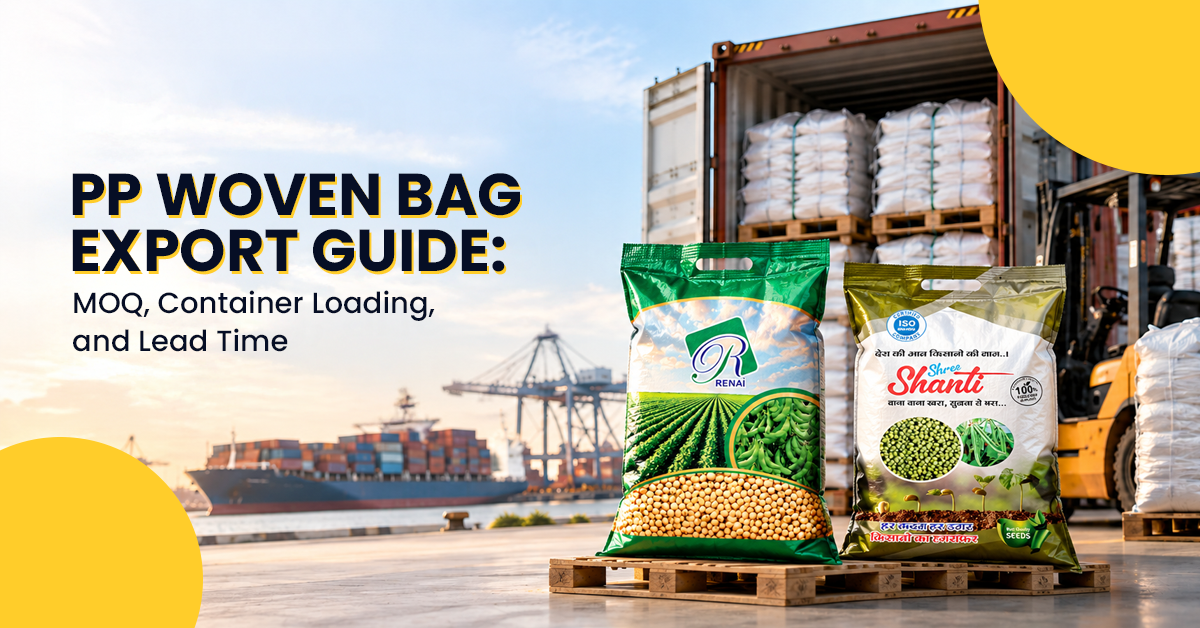
Start With the PP Woven Bag Specification, Not the Price
What Does PP Woven Bags MOQ Really Mean?
Container Loading Can Change the Real Cost Per Bag
Ask for a Loading Estimate Before Confirming the Order
What Actually Determines PP Woven Bags Lead Time?
Build the Purchase Order Around Fewer Assumptions
How to Compare a PP Woven Bags Manufacturer in India
Where Comsyn Fits Into the Export Conversation
Look Beyond the Quoted Bag Price
Frequently Asked Questions
What is the minimum order quantity for PP woven bags?
How many PP woven bags can fit in a 40-foot container?
How long does it take to manufacture PP woven bags for export?
What information should I send a manufacturer for a quotation?
Should I choose a woven bag supplier based on price alone?

- About Us
- Products
- Markets Served
-
- Investor Relation
- Board Of Directors
- Committees Of Board
- Corporate Governance
- Financials
- Annual Report
- Key Managerial Positions
- Shareholding Pattern
- Notices
- Policies Programme
- Announcements
- Statement of Investor Complaints
- Unpaid & Unclaimed Dividend
- Prospectus
- Investors Contact
- Subsidiary Financials
- IEPF
- Preferential Issue – 2024
- MOA & AOA
- Integrated Filing
- Sustainability
- Contact Us
- TechTex
- Brochure