In terms of cement packaging, every bag is more than just a vessel. It is a pivotal component of preserving product quality, optimizing handling efficiency, and preventing product loss throughout the entire supply chain. Cement’s properties make it extremely sensitive to not only moisture and rough handling, but also from a long time sitting in storage. Therefore, the design of the cement packaging will weigh heavily on whether there is consistency between manufacturing and construction sites. At Comsyn, we work with cement manufacturers to develop the most effective packaging solution for real-world storage, transportation, and export shipping conditions. There is a variety of cement bag construction types available in the marketplace to meet various needs. This guide will break down cement bag construction types commonly used in the marketplace, identify the functional performance characteristics of each type, and provide the information necessary for selecting the appropriate packaging solution. Cement packages should be able to withstand exposure to water, stacking heavy loads, unloading repeatedly, and transporting across long distances. In today’s supply chains, failures in packaging result in product loss, customer complaints, and damage to the company’s reputation. By understanding the types of bags that can be used as cement packaging, manufacturers can: With the expansion of distribution networks and an increase in exports, selecting an appropriate bag for cement is now more than just an option; it is a strategic choice for manufacturers. When cement is exposed to moisture in the atmosphere, it rapidly reacts to form lumps, has poor strength, and will not set properly when used. If packages of cement are not produced from quality materials, they will likely tear during handling, creating a potential for product loss and contamination. Today, there are many different types of cement bags that address these issues; however, choosing the right bag will depend on several factors, such as climate, storage length, handling method, and cost. The material that you choose for cement bags will greatly influence how they perform when it comes to storage, handling, and transportation. Generally, the most common cement bag materials offer different levels of durability, water resistance, cost efficiency, and eco-friendliness. Of all the options in the cement industry, polypropylene woven cement bags are one of the most widely used. These PP woven cement bags use multiple layers of polypropylene tape (woven to create a fabric) and provide a good balance between strength and cost. Some key advantages of PP woven cement bags include: – High tensile strength, which gives them the ability to handle extremely heavy loads – Tear and puncture-resistant when being handled – Lightweight, yet durable construction – Laminate coatings can be added for moisture protection These PP woven cement bags are ideal for domestic distribution where durability and cost control are equally important. Kraft cement bags have historically been used for cement by using multiple layers of Kraft paper to create the finished product. Kraft cement bags will be used in numerous locations with little to no storage time and dry climates. Primary Features: Kraft bags have sustainability benefits, but require careful handling and should only be used in areas with minimal moisture in the air. Cement bags made of HDPE (high-density polyethylene) can withstand difficult situations when exposed to moisture or handled roughly. Because their dense polymer structure is an excellent barrier compared to other types of bag construction, they offer many advantages as follows: When it comes to packaging bags for cement, the type of cement bag used is usually HDPE when the protection of the product inside the bag is of paramount importance. The type of material used in a bag will affect how efficiently it can be filled, how stable it is when stacked, and how well it will resist damage. Bags with a valve are used for rapid automated fill lines and will self-seal to help reduce the spillage of product. Bags with an open mouth are usually filled by hand or semi-automatically, and then closed by sewing or sealing after being filled. The correct selection of bag design will depend on the level of automation in the plant and the overall goal for operational efficiency. Not all cement bags are able to withstand the rigors of logistics equally. Analyzing cement bag classifications relative to their respective real-world performance results will permit the manufacturer to reduce losses and to improve the overall reliability of their supply chain operations. Cement bags made of laminated PP or HDPE provide extended shelf-life; High-barrier packaging has a positive impact on export shipments; Stable stacking minimizes damage to the warehouse and reduces risks to labor; Using proper types of cement bags impacts downstream efficiency and increases customer satisfaction. A compromise of cost, performance, and environmental responsibilityise required when making packaging decisions. Cement packaging has become more focused on being recyclable and complying with regulations in recent years. Properly disposed of, PP and HDPE bags can be recycled and can support sustainable practices through waste reduction. It is the manufacturer’s responsibility to create products that comply with their respective country’s quality and packaging standards in order to meet domestic as well as export regulations. The specifications for the ideal cement bag are based upon: By taking this customized approach, products can be expected to perform consistently in every stage of the supply chain. Selecting the best type of cement bags is an important choice with implications on the quality of your product, cost-effectiveness, and the reliability of your supply chain. Recognizing the positive and negative attributes associated with PP, kraft paper, and HDPE options allows manufacturers to make an informed investment in a package that not only helps safeguard their product but also protects their business through every phase of the manufacturing process. Properly packaged cement is protected from moisture and contamination, thus affecting shelf life and keeping the cement consistent in quality. Laminated bags will have a better ability to be stacked and will also provide additional grip and structural integrity. A cement bag manufacturer should comply with appropriate International Organization for Standardization (ISO), quality control, and packaging standards. Yes, cement bags manufactured using high-quality printing methods and laminations can be branded without compromising their strength or performance. Moisture ingress, poor stitching, weak material, and insufficient lamination are the main causes of damage to cement during transportation.Types of Cement Bags: PP vs Kraft vs HDPE – Full Guide
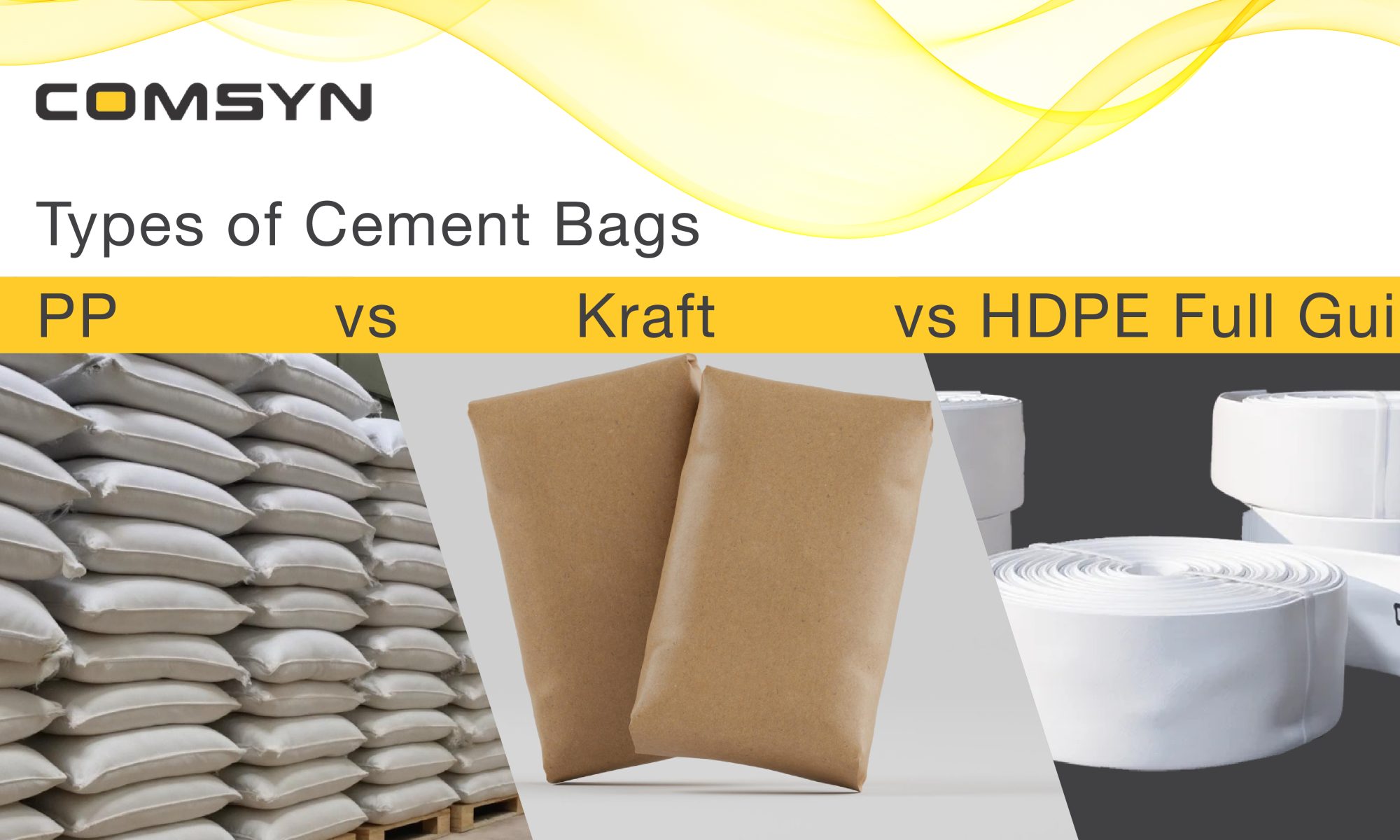
Types of Cement Packaging Bags in Modern Construction Supply Chains
Different Types of Cement Bags and Why Packaging Impacts Cement Quality?
Types of Cement Bags by Material
Types of Cement Packaging Bags by Construction & Design
Valve Bags vs Open-Mouth Bags for Filling Lines
Different Types of Cement Bags Compared by Performance
Moisture Resistance, Strength & Handling Safety
Storage Life, Transport Durability & Export Readiness
Types of Cement Bags – Cost, Sustainability & Selection
Cost vs Performance Across Cement Packaging Materials
Recyclability, Waste Reduction & Compliance Standards
Choosing the Right Cement Bag for Climate, Storage & Distribution
Concluding Remarks
FAQs

- About Us
- Products
- Markets Served
-
- Investor Relation
- Board Of Directors
- Committees Of Board
- Corporate Governance
- Financials
- Annual Report
- Key Managerial Positions
- Shareholding Pattern
- Notices
- Policies Programme
- Announcements
- Statement of Investor Complaints
- Unpaid & Unclaimed Dividend
- Prospectus
- Investors Contact
- Subsidiary Financials
- IEPF
- Preferential Issue – 2024
- MOA & AOA
- Integrated Filing
- Sustainability
- Contact Us
- TechTex
- Brochure