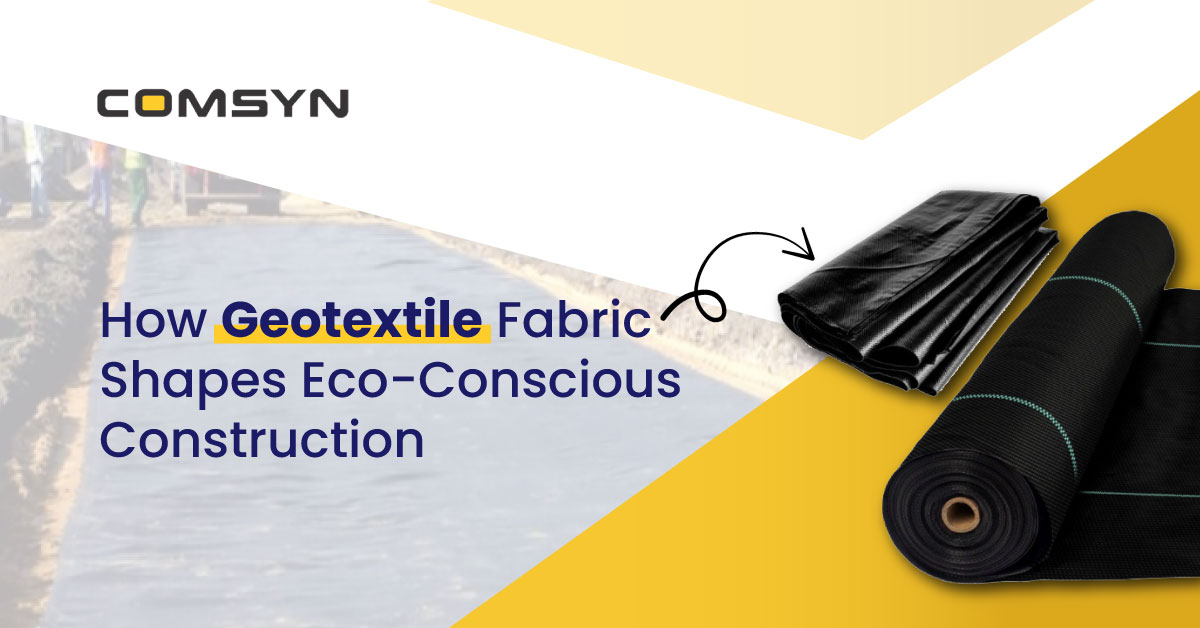
Sustainability is now commonly expected in construction and infrastructure, rather than being a choice or option. Client, regulator, and community expectations now revolve around durable projects with reduced environmental impact and enduring performance. One of the materials that is quietly transforming our methods of building is the geotextile fabric. Geotextile fabric stabilises soils, manages water, reduces erosion, and encourages more mindful use of the land; all excellent ways to support environmentally sustainable building practices, alongside roads, embankments, land reclamation, and more. At Comsyn, we manufacture high-quality geotextile fabric solutions designed for performance and sustainability. In this blog, we’ll define what geotextile fabric is, we will consider the properties of geotextile, we will look at the role of geotextile fabric in sustainable construction, go over applications and benefits, and finally, we will provide you with reasons why Comsyn should be your partner in delving into sustainable geotextile fabrics. Geotextile fabric refers to permeable textile materials—mostly synthetic (polypropylene, polyester) but in some cases natural fibres—that are used in contact with soil or rock and other geotechnical materials for civil engineering purposes. Geotextile fabric is available in two main types: woven and non-woven, with different manufacturing methods and performance characteristics. In summary, when you think of geotextile fabric, think of a material placed in between engineered soil layers to perform functions such as separation, filtration, reinforcement, and drainage. Why is geotextile fabric so important for sustainable construction? Because it combines qualities that are both consistent with sustainable objectives and address performance requirements. A premium geotextile fabric (particularly an aversion fabric) can increase the load-bearing capacity of weak soils, aid in load distribution, and reduce settlement or deformation. In configurations of reinforcement, a geotextile fabric is often seen underneath aggregate layers, or within embankments, to inhibit lateral spreading of soil. A non-woven geotextile is very good at passing water while keeping soil particulates from slipping. This makes them a great application for drainage layers, filtration systems, erosion control, and managing groundwater flow. The water permeability and filtration properties help sustainably manage water, rather than just disposing of it. If slopes or embankments or shorelines are prone to erosion, incorporating a layer of geotextile fabric provides the first line of defence in stabilising soil in place, allowing vegetation to take root, and lessening the amount of structural response. In layered construction (for example, road bases over soft subgrade), geotextile fabric acts as a separation membrane, preventing the finer subgrade from mixing with coarser aggregate layers and maintaining the integrity of the structure over time. As geotextile fabric minimizes the need for a large import of granular material, reduces transport or excavation, results in improved water management, and extends the life of the asset, it works well with sustainable and circular-economy aims. Further, many fabrics are reusable or made from materials selected for durability and low maintenance. Having reviewed what geotextile fabric is and its main characteristics, it’s time to consider how it enables eco-minded construction practices in the real world. Erosion is one of the significant issues to deal with in infrastructure on hillsides, coastal works, and embankments where natural areas exist. By installing geotextile fabric on slope surfaces, or as a separation layer under erosion protection, geotextile fabric can help you maintain the surrounding ecology, landform, and contours, and minimize structural impact on the environment. Managing water flow is a focus of sustainable design. For instance, when installed as drainage layers or under retention basins, geotextile fabric can manage water flow, divert only the excess, or even capture and store water in rain gardens and green infrastructure systems, to eliminate stormwater runoff, reducing flooding potential, and enabling the reuse of water. The use of geotextile fabric reduces the quantity of quarried aggregates, excavation required, and imported fill material necessity, and can often produce a thinner building approach that performs just as well, or even better. So, less impact on natural resources, emissions produced for transport, and a carbon footprint. Instead of using bulky concrete or steel retaining structures, geotextile fabric can stabilize slopes and maintain less-intrusive and more natural, gentle-looking landscapes. Vegetation can grow over the geotextile fabric, and the landscape appears more natural. In urban projects like green roofs, rain gardens, permeable pavements, and tree pits, geotextile fabric is valuable for separation, filtration, and drainage as part of the system. Using geotextiles in these systems is helpful for biodiversity, urban run-off, and longevity of pavements or plantings. Let’s consider the distinct application space where geotextile fabric is transforming construction into more environmentally-conscious and sustainable construction. The key takeaway and lesson taken away from these applications, however, is making sure that the appropriate type, woven versus non-woven, weight, strength, and permeability of geotextile fabric is considered for the particular application, which is what makes the difference between a good overall approach and long-term maintenance needs. While the initial expense of putting in geotextile cloth may be greater than basic unreinforced fill, lifecycle savings include: less maintenance, fewer repairs, longer asset life, and lower cost for excavating and hauling material. This makes geotextile fabric an attractive, sustainable construction value proposition. A properly specified geotextile fabric will resist degradation, moisture, UV (if under protection), chemicals (depending on the fabric type), and will maintain performance for decades. This minimizes work interruptions and supports long-term infrastructure resilience. The use of geotextile fabric means decreased natural aggregates, decreased hauling, less landfill, improved water management, and, commonly, items that can be reused or recycled. These are tightly correlated with green infrastructure and low-carbon construction. Whether in India or elsewhere, construction projects around the world are under growing demands to do more with less—less material sources, less money, environmental compliance, and scrutiny from society. Geotextile fabrics allow engineers and developers to fulfill those growing demands responsibly without compromising structural performance or environmental obligations. At Comsyn we know that geotextile fabric is not a “one size” proposition, and here is why it makes sense to partner with us—one, superior quality materials: Our geotextile fabric is manufactured with high-quality polymer fibres, optimized yarns and manufacturing processes to achieve reliable strength, permeability, durability and performance; two, customizable options: you need a woven geotextile fabric for reinforcement, a non-woven fabric for drainage/filtration, special weights, widths or finishes, etc, we can customize options that meet your needs for your eco-project; three, innovation focus: we invest in research and development to keep our geotextile fabric ahead of what is being available in the market (i.e., biodegradable options, recycled content, improved UV resistance and chemical resistance etc,); four, sustainability built in product preferences: we design our products and take into account } circularity, reduced waste, low carbon footprint, and longevity – to support your eco-conscious construction goals; and five, support & expertise: from concept to installation, our technical team can support you in selecting the best geotextile fabric suitable for your application, provide appropriate design interface with soils, and installation, and performance monitoring. As buildings evolve to satisfy the dual imperatives of performance and sustainability, geotextile fabric has grown to be a crucial building block for sustainable construction. Geotextile fabric provides engineers with a way to build it better — and greener — regardless of whether they are using the fabric for stabilizing soils, managing water, reducing resources to perform a task, or for gentler land use. If you are contemplating a sustainable development project, whether it’s a road, railway, sea wall, green roof, or other form of reclaimed land, it is best to partner with a firm that understands the material and mission. Comsyn is prepared with quality geotextile fabric solutions that are designed for durability, environmental responsibility, and cost-effective performance. Let’s build a greener future together! Installation time varies by project and site, but geotextile fabric installation is typically done by an experienced installation crew at several thousand m² per day. In providing resource conservation, drainage improvement, service life extension, and stormwater management support, geotextiles can help gather several LEED credits. Yes—when designed and installed properly, geotextile fabric (especially woven) can aid soil reinforcement and slope stability in seismic and high-loading conditions. Many types of geotextiles are made with specific polymers to talk about chemical resistance (specific polymers, coatings, or blends)—specifying the correct grade based on industrial exposure is critical. In applications like rain gardens or tree pits, permeable pavements, or similar, the geotextile fabric provides a filtration/separation/drainage layer to support healthy plants growing and healthy urban water systems.How Geotextile Fabric Shapes Eco-Conscious Construction?
What is Geotextile Fabric?
Key Properties of Geotextile Fabric
Role in Eco-Conscious Construction
Applications in Sustainable Projects
Environmental Impacts and Advantages
Why Choose Comsyn for Geotextile Fabric?
Conclusion
FAQs

- About Us
- Products
- Markets Served
-
- Investor Relation
- Board Of Directors
- Committees Of Board
- Corporate Governance
- Financials
- Annual Report
- Key Managerial Positions
- Shareholding Pattern
- Notices
- Policies Programme
- Announcements
- Statement of Investor Complaints
- Unpaid & Unclaimed Dividend
- Prospectus
- Investors Contact
- Subsidiary Financials
- IEPF
- Preferential Issue – 2024
- MOA & AOA
- Integrated Filing
- Sustainability
- Contact Us
- TechTex
- Brochure
