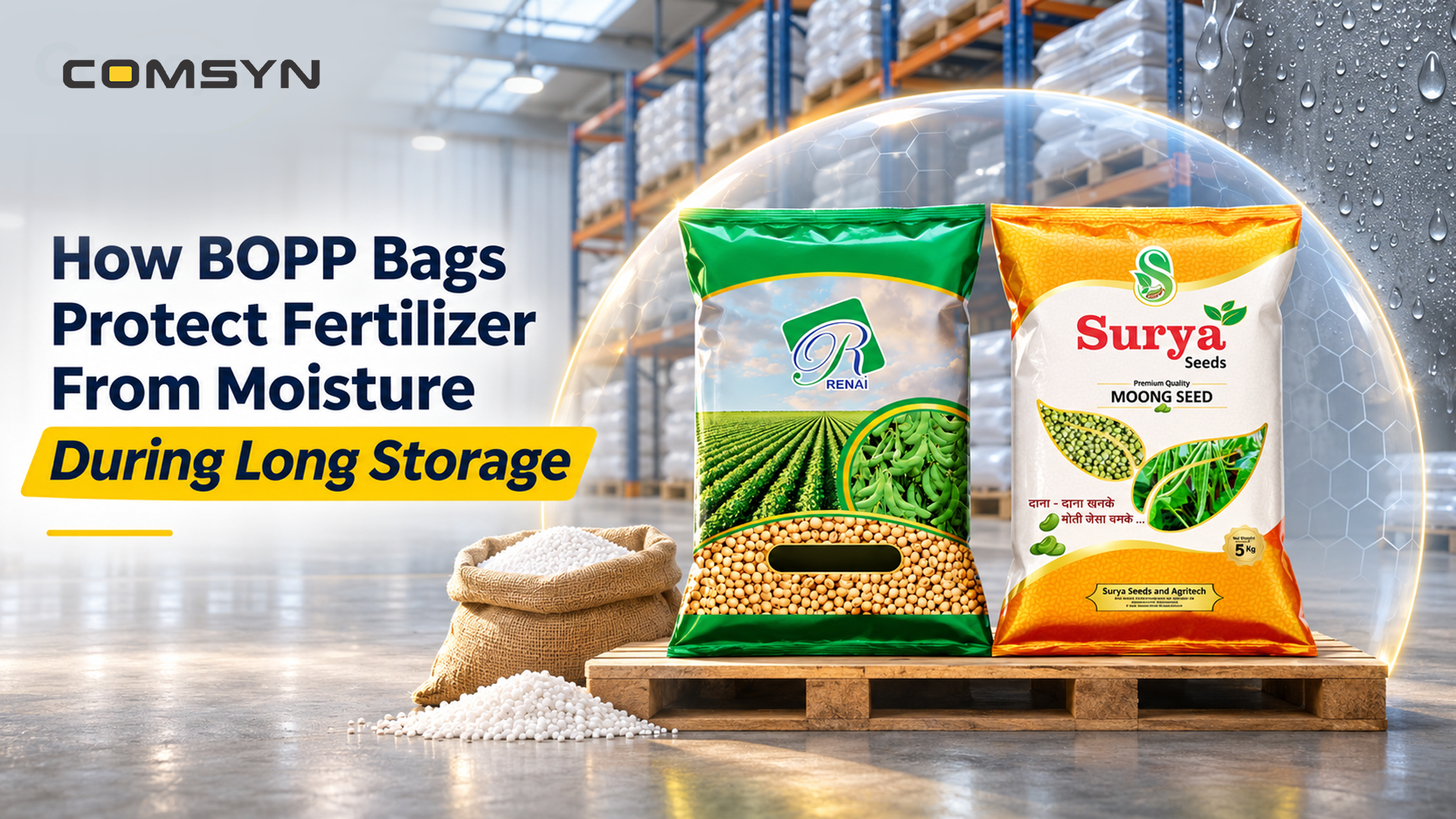
The packaging of fertilizer presents a challenge. Packaging may sit in a warehouse for weeks or months, move through humid environments, travel long distances, and still reach the end user in good condition. During this time, moisture can be a serious problem. That is why BOPP bags find application in the packaging of fertilizers, which require strong packaging, reliable handling, and a higher degree of protection during storage. BOPP bags combine a woven polypropylene body with a BOPP laminated surface, which helps achieve enhanced barrier efficiencies along with excellent printing quality. Several fertilizer products are highly susceptible to moisture. While in contact with water or humidity, some fertilizers tend to absorb moisture from the air. Over time, this might eventually lead to the phenomenon of caking, clumping, or a change in the state of the product. The above-mentioned phenomenon could cause problems with fertilizer handling, storage and application. Exposure to moisture could happen at different phases of the life cycle, including: This means that the choice of fertilizer bags is equally important as storage practices. BOPP bags that are used for packing fertilizer usually comprise a woven polypropylene construction along with a printed BOPP film covered on the surface. This combination of woven and laminated structures is advantageous in two ways. The woven structure adds strength while the laminated film provides protection from outside moisture, dirt, dust, and contamination. This feature of BOPP bags becomes important for fertilizer manufacturers and distributors, especially in situations when their products are stored for longer periods. One of the major characteristics of BOPP fertilizer bags is the laminated exterior. The BOPP layer behaves like a shield that prevents external moisture from reaching the bag. This plays a significant role in lowering the impact of moisture coming from outside the bag. The additional layer of material gives the bag water resistance to a large extent. However, the final level of water resistance depends on the design of the bag, liner, closure system, and conditions of storage. Extended storage times lead to extra packing issues. Fertilizer packets can be stored in a warehouse for months before they reach the customer. The packaging, however, has to withstand the climatic conditions. Properly designed watertight packets can help ensure that the moisture from the environment does not spoil the fertilizer. This mainly concerns regions with hot and humid climates or huge seasonal differences. Choosing the right specification for the packet helps to keep the fertilizers in good condition for a long time when combined with appropriate storage techniques. The sensitivity of the fertilizers to moisture will differ in different products. Where proper protection is essential, an appropriate liner should be used together with a woven BOPP bag. The interior lining introduces one more protection layer between the fertilizer and the environment. It would especially benefit hygroscopic fertilizer products or those that should be stored for a long time. The selection of the liner will depend on the kind of fertilizer used, storage conditions, and expected life of the product. Moisture protection is effective only if the bag remains intact. The fertilizer bags are typically heavy and must go through numerous handling processes before the product gets sold in the marketplace. Thus, the package should be strong enough to withstand: Thanks to the woven polypropylene material that BOPP bags are manufactured from, they provide enough strength for hard industrial operations. Fertilizers are generally kept in bulk. Bags may be piled up in warehouses for months, sometimes in multiple tiers. With good bag design, the stacks can be stable and easy to handle. The right size bags can help organize a stack and reduce its motion and damage to the pack. Bag dimensions, weight of the filling, and the type of closures are important factors that influence the performance of bags. Fertilizer packs are often subjected to dust, dirt, and different kinds of contaminants while in warehouse and transport areas. Laminated exterior of BOPP bags for fertilizer packing has a smoother top surface, used for packaging that stays cleaner. This feature is vital, especially for branding of fertilizer products as they require a professional appearance by the time they reach dealers and retail points. Packaging that is cleaner is also easier to print. Fertilizer companies can provide many items with different recipes or applications. The packaging must enable consumers to quickly spot products. With BOPP printing, companies can take advantage of clear pictures, names, nutrient information, and color coding. The packaging of a fertilizer product can be used for: This is why BOPP bags not only protect products but also allow for good communication with consumers. The production of fertilizers may occur in one locality, and their sale may happen in another locality. As fertilizers are transported, they may go through locations having different levels of humidity. Employing moisture-resistant fertilizer packaging can provide consistent protection under various transport and storage conditions, which is pertinent especially in humid markets like tropical or monsoon markets. There does not exist any single type of packaging that suits all fertilizers. The characteristics of various fertilizer products include: For this reason, it is essential to choose the bag based on the type of fertilizer being used. Some fertilizers will require plain laminated woven bags, while others need further packing methods to be ensured. It follows that packaging development plays an important role in fertilizer safety. An effective packaging design won’t be able to protect its contents if the closure option is not appropriate. If the seams and the closure system are not well put together, water might enter the bag. Therefore, it is necessary to choose the closure system according to the specific packaging needs. Sometimes packaging designers choose to use stitches or liners, depending on their needs. The packaging system as a whole has to work perfectly to guarantee the expected protection. Fertilizer producers need to strike a balance when it comes to packaging. The packaging should be durable, able to withstand bumps during transport, store the product without ruining it, as well as be useful for branding and delivery of product information. BOPP bags made of woven polypropylene provide just that, thanks to the combination of corrugated strength and laminated protection. The bags can be customized based on size, print, liner, and storage conditions. Comsyn is a company offering BOPP woven packaging solutions tailored for tough industrial applications. Packaging can be customized according to the type of fertilizer, filling weight, storage time, and transportation conditions. Bags made of BOPP by Comsyn combine a robust polypropylene base with high-quality laminated print, allowing them to bring out the best in terms of packaging capabilities and brand marketing. In cases when extra moisture protection is required, various useful combinations of structures and liner materials can be introduced according to the specific needs. The aim is to achieve results that make it possible to achieve uninterrupted performance of the product from filling to storage for the period to come and afterwards shipping. Moisture is one of the crucial aspects to consider when it comes to long-term fertilizer storage. Humidity can influence the condition of the product, and poorly rendered packaging could worsen the situation. That is why it is essential to choose proper fertilizer bags that combine strength, moisture resistance, and reliable holding features. BOPP bags have emerged as an effective packing option combining woven durability with a laminated protective surface in one. Using the right structure, liner, and closure allows users to make moisture-proof fertilizer packaging. BOPP bags for fertilizer combine a strong woven polypropylene structure with a laminated surface. This provides good handling strength while helping reduce exposure to external moisture, dust, and dirt. BOPP laminated bags can provide good moisture resistance, but the final level of protection depends on the complete packaging structure. Moisture-proof bags may require suitable liners, proper closure, and appropriate storage conditions depending on the fertilizer. Yes. BOPP bags for fertilizer packaging can be designed for longer storage periods, provided the bag specification is matched to the product and storage environment. Liners may be added when additional moisture protection is needed. Moisture-resistant fertilizer packaging bags use protective layers that help reduce moisture transfer from the surrounding environment. Bag construction, lamination, liners, and sealing all contribute to overall performance. Yes. BOPP bags can be customised in terms of size, print design, carrying capacity, liner options, lamination and closure type to suit different fertilizer products and distribution requirements. This one is intentionally more moisture- and storage-focused than the animal feed blog, so the three Comsyn articles don’t feel like the same template with keywords swapped.How BOPP Bags Protect Fertilizer From Moisture During Long Storage
Why Moisture Is a Major Concern in Fertilizer Storage?
How BOPP Bags Help Protect Fertilizer?
1. Laminated Surface Helps Reduce Moisture Exposure
2. Better Protection During Long Storage
3. Inner Liners Can Add Another Layer of Protection
4. Strong Construction Helps Prevent Bag Damage
5. Better Stackability Supports Warehouse Storage
6. Laminated Bags Help Protect Against Dust and Dirt
7. Strong Printing Helps Product Identification
8. Moisture-Resistant Packaging Supports Distribution in Humid Markets
9. Different Fertilizers May Need Different Bag Specifications
10. Proper Closure Is Just as Important as the Bag Material
Why BOPP Bags Work Well for Fertilizer Packaging?
Comsyn BOPP Bags for Fertilizer Packaging
Final Thoughts
Frequently Asked Questions
1. Why are BOPP bags suitable for fertilizer packaging?
2. Are BOPP fertilizer bags completely moisture-proof?
3. Can BOPP bags be used for long-term fertilizer storage?
4. What makes moisture-resistant fertilizer packaging bags effective?
5. Can fertilizer BOPP bags be customised?

- About Us
- Products
- Markets Served
-
- Investor Relation
- Board Of Directors
- Committees Of Board
- Corporate Governance
- Financials
- Annual Report
- Key Managerial Positions
- Shareholding Pattern
- Notices
- Policies Programme
- Announcements
- Statement of Investor Complaints
- Unpaid & Unclaimed Dividend
- Prospectus
- Investors Contact
- Subsidiary Financials
- IEPF
- Preferential Issue – 2024
- MOA & AOA
- Integrated Filing
- Sustainability
- Contact Us
- TechTex
- Brochure