For modern infrastructure and environmental engineers, controlling water flow, preventing the movement of polluted water, and protecting soil structure are essential requirements. In landfills, keeping contaminants contained while simultaneously protecting the surrounding soil are paramount elements of design and construction. The requirement for effective barrier solutions has led to the development of HDPE Geomembrane products for use across many of these critical applications. A geomembrane is an impermeable synthetic material through which fluid migration can be controlled within an engineering application. Of the various types, HDPE-based geomembranes generally provide superior performance because they are durable, corrosion-resistant, long-lasting, and easy to install. In this guide, you will learn what HDPE Geomembranes are, how they work, their key properties and benefits, and how they serve as effective waterproofing membranes across multiple industries. The HDPE Geomembrane is a synthetic membrane made from high-density polyethylene designed to prevent the migration of liquids, gases, and contaminants. It delivers high tensile strength, flexibility, and outstanding performance across demanding environmental conditions. HDPE Membranes are engineered to be fully impermeable, preventing liquids from penetrating through the membrane — making them the go-to containment solution wherever leakage or seepage must be stopped. Key characteristics of HDPE Membranes: These properties make HDPE Geomembrane one of the most dependable membrane systems available for waterproofing and the containment of liquids, gases, and contaminants. A geomembrane’s primary role is to act as a physical barrier. Once installed, it prevents liquids or gases from migrating through soil. In a landfill or reservoir application, for example, the geomembrane is placed under and around the structure to keep liquids inside, preventing leakage into the surrounding environment — ensuring both environmental integrity and effective resource management. HDPE membrane products are manufactured in several configurations based on the intended application: The standard type with a smooth surface is used in reservoirs, canals, and as landfill liners. Features a roughened surface for improved friction — ideal for use on slopes and embankments where slip resistance is critical. Used in leak detection systems, particularly in high-risk containment zones. Each type is manufactured to fulfill specific engineering specifications across different environmental conditions. As a waterproof membrane, HDPE is extremely effective in preventing water or chemical flow, making it perfectly suited for water storage, irrigation systems, and waste containment applications. HDPE membranes resist a broad range of chemicals, including acids, alkalis, and industrial wastes — making them suitable for landfills, chemical storage facilities, and mining operations. The long-term durability of HDPE membranes holds up under UV degradation, temperature fluctuation, and mechanical impact, delivering consistent performance regardless of environmental exposure. Compared to traditional waterproofing methods, HDPE geomembranes deliver an economical solution through lower installation costs, minimal ongoing maintenance, and an extended product life. By preventing soil and groundwater contamination, HDPE geomembranes are critical to building sustainable infrastructure and responsible waste management systems. Geomembranes serve as liners and covers in landfill and disposal systems, acting as a protective barrier against leachate contaminating groundwater — one of the most critical applications of HDPE waterproofing membranes. HDPE membrane systems are installed in water reservoirs, canals, and irrigation channels to prevent seepage, contributing to water conservation and improved agricultural efficiency. The mining industry employs geomembranes in heap leach pads, tailings ponds, and containment of contaminants. Their high chemical resistance makes them ideal for containing mining waste safely. Many industries use HDPE membrane systems for the safe storage of hazardous liquids, including chemicals and industrial wastewater, preventing materials from leaking into the surrounding environment. Aquaculture facilities and fish farms utilize HDPE geomembranes to maintain water levels in ponds and prevent seepage — protecting both the farming environment and local groundwater. Geomembranes are used in waterproofing tunnels, protecting building foundations, and supporting road and rail projects. Their high durability and flexibility make them well-suited for complex engineering applications. Choosing a trustworthy HDPE membrane supplier guarantees the geomembrane will perform correctly for many years. Comsyn’s proven expertise and manufacturing capability ensure every geomembrane product meets strict quality and performance benchmarks. Key factors to evaluate in a supplier: An experienced supplier ensures your membrane meets all project specifications and performs as intended under real-world conditions. Correct installation is essential for an HDPE geomembrane to function properly. Installation steps typically include surface preparation, membrane placement, seaming via heat welding, and final inspection and testing. Once installed, HDPE geomembranes require minimal ongoing maintenance, making them a highly viable long-term solution. With a growing global commitment to sustainability and environmentally sound practices, geomembranes are set for substantial growth. New technologies are enhancing performance through greater strength, improved flexibility, and more eco-friendly materials. Ongoing R&D is focused on improving leak detection, extending service life, and ensuring reliable performance in increasingly harsh environmental conditions. Manufacturers that prioritize quality, technology, and compliance will remain essential partners in future infrastructure and environmental projects. Modern engineering relies on HDPE Geomembrane as a critical material for waterproofing, containment, and environmental protection. Its combination of high strength, durability, and chemical resistance enables reliable performance across landfills, reservoirs, mining operations, and construction projects. Selecting the best HDPE Membrane Supplier ensures both dependable product performance and long-term cost savings. HDPE geomembrane is used for containment and waterproofing in landfills, reservoirs, mines, and industrial storage facilities. It creates an impermeable layer that blocks liquids and gases from passing through, protecting soil and groundwater from contamination. HDPE membranes offer some of the highest tensile strength, chemical resistance, and durability of any geomembrane material available. Depending on the specific application, installation quality, and environmental conditions, the average lifespan is estimated at 20 to 30+ years. Look for certified manufacturing processes, high-quality virgin materials, strong technical support, customization capability, and proven project experience.What Is HDPE Geomembrane? Uses, Benefits, and Applications Explained
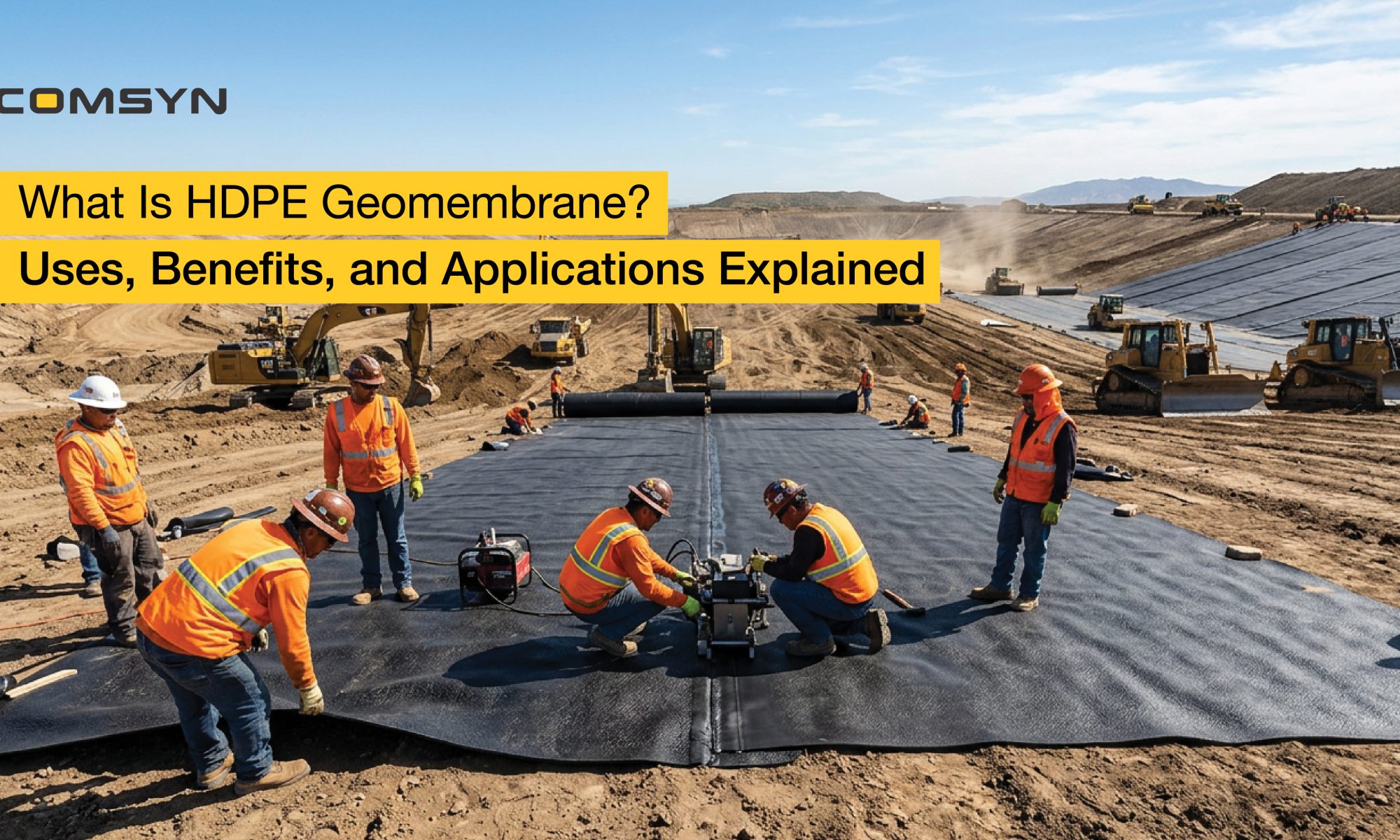
What Is HDPE Geomembrane?
How HDPE Geomembrane Works?
Types of HDPE Geomembrane
Key Benefits of HDPE Geomembrane
Waterproofing Properties
Chemical Resistance
Longevity
Cost Effectiveness
Environmental Benefits
Applications of HDPE Geomembrane
Landfill / Waste Management Systems
Water Storage / Irrigation Systems
Mining Operations
Industrial Containment
Aquaculture / Fish Farming
Construction / Infrastructure
Choosing the Right HDPE Membrane Supplier
Installation and Maintenance
The Future of HDPE Geomembranes
Conclusion
FAQs

- About Us
- Products
- Markets Served
-
- Investor Relation
- Board Of Directors
- Committees Of Board
- Corporate Governance
- Financials
- Annual Report
- Key Managerial Positions
- Shareholding Pattern
- Notices
- Policies Programme
- Announcements
- Statement of Investor Complaints
- Unpaid & Unclaimed Dividend
- Prospectus
- Investors Contact
- Subsidiary Financials
- IEPF
- Preferential Issue – 2024
- MOA & AOA
- Integrated Filing
- Sustainability
- Contact Us
- TechTex
- Brochure