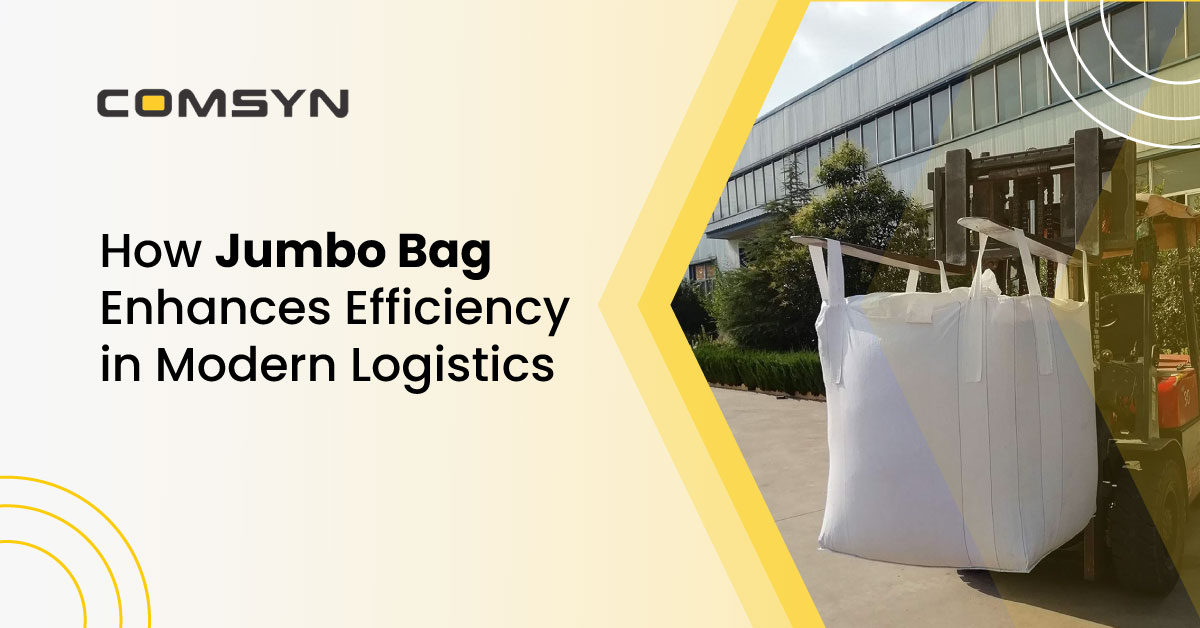
In the quick-moving global supply-chain landscape, the optimal packaging is no longer an afterthought; it is a strategic asset. The humble jumbo bag (Flexible Intermediate Bulk Container, or FIBC) has become the main high-impact trigger in modern logistics for bulk material handling. Jumbo bags are changing how companies move and store bulk commodities by facilitating loading and unloading, optimising cubic space ratios, reducing transport and handling charges, and pushing sustainability aims. Comsyn is are expert in delivering high-quality jumbo bag solutions to drive efficiency, reliability, and eco-performance in logistics operations. A jumbo bag is a sizable, durable, flexible container produced from woven polypropylene (PP) material, designed to store and move large volumes of flowable materials such as powders, granules, fertilizers, sand, or plastic resin. Jumbo bags provide key benefits over traditional hard packaging (drums, sacks, boxes) in terms of size, price, and ease of handling. In the supply chain, jumbo bags provide a link between bulk material and handling efficiency—delivering to warehouses, filling, transport, and unloading systems designed for end-users. Jumbo bags are an effective design for modern operations, due to their size and capacity, enabling to combination of operations related to material pickup, on-site storage, transference, and off-loading. Such traits make jumbo bags an essential component of modern operations. Let’s dive into how using a jumbo bag can boost operational efficiency across multiple dimensions of logistics. Utilizing a jumbo bag makes it easier to fill, transport, and unload large amounts of product. Rather than utilizing dozens or hundreds of small bags, one jumbo bag can store hundreds to thousands of kilograms of product, which reduces unit handling, time spent palletising, labour time, and packaging waste. Since these bags are designed with lift loops, points for forklift or crane attachment, and specialised discharge spouts, they fit very well into mechanised systems, minimize manual handling, can speed cycle times, and lower the potential for damage or error. A jumbo bag is designed to be a safe, efficient storage, collapsing flat when empty, stacks nicely, and can be transported and stored with little overhead. Its woven PP fabric is high-strength and durable; many are moisture-resistant and are suitable for re-use. Less packaging waste means fewer changes of containers, less downtime from filling and emptying, and fewer incidents of product losses from spillage or other degradation. Jumbo bags help reduce environmental impact. The materials that they are made of (woven polypropylene) can often be reused or recycled, they often use less secondary packaging than a lot of rigid containers, and their large capacity means that products will be shipped less often, while substantially decreasing the net volume of packaging per unit of material transported. For companies with an emphasis on ESG, sustainability, and circular-economy objectives, the use of jumbo bags may be a way to achieve operational and green objectives simultaneously. Jumbo bags come in various forms—logistics functions may justify using specialty versions constructed for specific material, handling conditions, and transport mode. Here are just a few of the common types: By selecting the right type of jumbo bag for your cargo, handling process, and return cycle, you maximise the logistic efficiency and reduce risk. Jumbo bags are utilized in different industries, everywhere bulk materials are required to be filled, transported, stored, and discharged in an efficient manner. Across these applications, the recurring theme is that the right jumbo bag reduces cost, handling time, packaging waste, and risk—key factors in modern logistics. At Comsyn, we recognise logistics efficiency is maximised through both a material handling solution and good packaging design. Here’s how we create value with our jumbo-bag options: The humble but mighty jumbo bag is so much more than a bag – it is a logistics facilitator. The right jumbo bag serves to improve logistics and efficiencies in bulk material handling across today’s supply chains. From agriculture to chemicals to construction to global export logistics, jumbo bags are a necessity. Eliminating handling inefficiencies and optimising bulk operations while ensuring speed, throughput, and sustainability is what we strive for with Comsyn jumbo bags. Shipping bulk materials smarter, faster, and greener starts here. Standard jumbo bags have a load capacity of anywhere between 500 kg and up to 2,000 kg or more, depending on the fabric and/or construction. Look for ISO quality systems, United Nations certification (if the goods are hazardous), food-grade symbols, and safe working load (SWL) ratings. Check and inspect all loops and seams, take care not to damage the bag fabric during filling and discharging, store off the ground while empty, and clean as needed. You need to know the bulk density of your material and the required payload, and match this to the bag dimensions and SWL. When specifying the bags, you should consider optimum fill height, discharge spout size, and transport stacking parameters.How Jumbo Bag Enhances Efficiency in Modern Logistics?
What Are Jumbo Bags?
How Jumbo Bags Enhance Efficiency?
Bulk Handling and Transportation
Storage and Protection
Environmental Sustainability
Types of Jumbo Bags for Specific Needs
Applications in Modern Logistics
Why Choose Comsyn for Jumbo Bags?
Conclusion
FAQs

- About Us
- Products
- Markets Served
-
- Investor Relation
- Board Of Directors
- Committees Of Board
- Corporate Governance
- Financials
- Annual Report
- Key Managerial Positions
- Shareholding Pattern
- Notices
- Policies Programme
- Announcements
- Statement of Investor Complaints
- Unpaid & Unclaimed Dividend
- Prospectus
- Investors Contact
- Subsidiary Financials
- IEPF
- Preferential Issue – 2024
- MOA & AOA
- Integrated Filing
- Sustainability
- Contact Us
- TechTex
- Brochure